
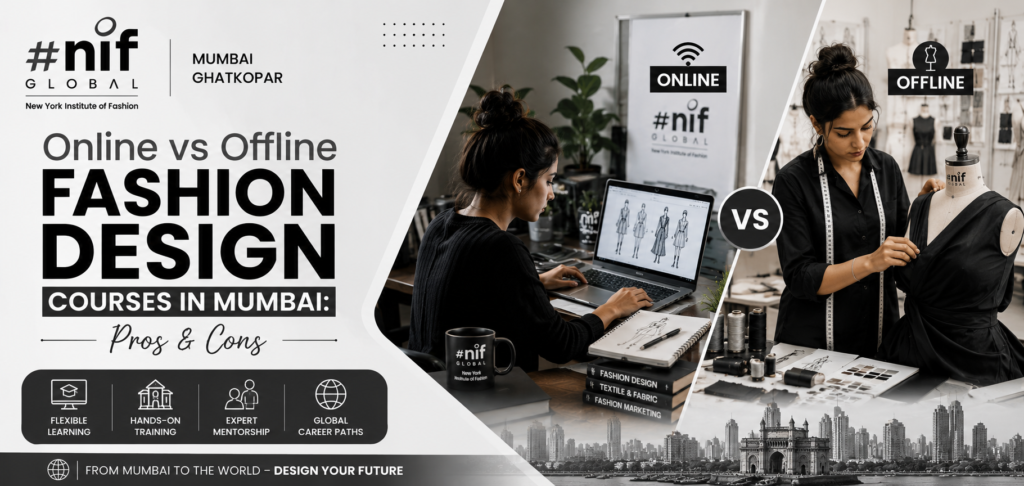
Mumbai, the fashion capital of India, offers aspiring designers numerous pathways to pursue their creative dreams. With the evolution of digital learning, students now face a crucial decision: should they opt for online or offline fashion design courses? This comprehensive guide explores both formats, helping you make an informed choice that aligns with your career goals, learning style, and personal circumstances.
Best Fashion Design Courses in Mumbai 2024
Mumbai houses some of India’s most prestigious fashion education institutions, offering diverse programs that cater to different skill levels and career aspirations. The landscape of fashion education has transformed significantly, with both traditional institutes and innovative online platforms competing for students’ attention.
The best courses combine theoretical knowledge with practical application, covering pattern making, draping, fashion illustration, textile science, garment construction, and fashion business management. Whether you choose online or offline learning, Mumbai’s fashion education ecosystem provides access to industry-relevant curriculum designed by experienced professionals.
Top Course Categories:
- Diploma in Fashion Design (1-2 years)
- Bachelor’s Degree in Fashion Design (3-4 years)
- Certificate Courses in Specialized Areas (3-6 months)
- Master’s Programs in Fashion Management (2 years)
- Short-term Fashion Styling Courses (1-3 months)
When evaluating the best fashion design institute in Mumbai, consider factors like faculty expertise, industry connections, infrastructure, placement records, and alumni success stories. Institutions like NIF Global Ghatkopar have earned recognition for their comprehensive curriculum and student-centric approach, offering both online and offline learning options.
Online Fashion Design Courses Mumbai: Cost Comparison
The financial aspect of fashion education significantly influences student decisions. Online courses generally present a more budget-friendly alternative to traditional classroom-based programs, though the cost difference varies depending on the institution and course depth.
Cost Breakdown:
| Course Component | Online Courses | Offline Courses |
| Tuition Fees | ₹30,000 – ₹1,50,000 | ₹1,00,000 – ₹5,00,000 |
| Materials & Supplies | ₹10,000 – ₹30,000 | ₹25,000 – ₹75,000 |
| Transportation | ₹0 | ₹15,000 – ₹40,000/year |
| Accommodation (if needed) | ₹0 | ₹60,000 – ₹2,00,000/year |
| Technology/Software | ₹5,000 – ₹20,000 | Often included |
Online courses eliminate commuting costs and allow students to learn from anywhere, reducing the need for relocation. However, students must invest in reliable internet connectivity, a decent computer, and design software licenses. Offline programs typically include access to specialized equipment, fabric libraries, and studio spaces within their fee structure.
Top Fashion Design Institutes in Mumbai for Offline Learning
Mumbai’s offline fashion institutes offer immersive learning experiences with state-of-the-art facilities. These institutions have established reputations built over decades of producing successful fashion professionals.
Leading Offline Institutes:
- NIF Global Ghatkopar – Known for its industry-aligned curriculum and modern infrastructure
- NIFT Mumbai – Premier government institution with competitive admissions
- Pearl Academy – Focus on contemporary design and global fashion trends
- Sophia Polytechnic – Women’s college with strong fashion design legacy
- Raffles Design International – International curriculum with global perspective
These institutes provide comprehensive Fashion Design Courses in Mumbai with access to professional-grade sewing machines, pattern-making labs, draping studios, computer-aided design (CAD) labs, and extensive fabric libraries. The campus environment fosters creativity through constant interaction with peers and faculty.
Flexibility of Online Fashion Designing Classes vs Traditional Courses
Flexibility represents one of the most significant advantages of online learning, especially for students balancing education with work or family responsibilities.
Online Learning Flexibility:
- Study at your own pace with recorded lectures
- Access course materials 24/7 from any location
- Schedule flexibility for working professionals
- Ability to pause and rewind complex demonstrations
- Learn while managing other commitments
Traditional Course Structure:
- Fixed class schedules (typically 9 AM – 5 PM)
- Mandatory attendance requirements
- Immediate clarification of doubts during class
- Structured learning environment with less procrastination
- Real-time feedback during practical sessions
Online courses suit self-motivated learners who excel with independence, while offline programs benefit those who thrive in structured environments. Consider your learning style, discipline level, and time availability when choosing between these formats.
Career Opportunities After Fashion Design Course in Mumbai
Mumbai’s fashion industry offers diverse career paths for trained designers, regardless of whether they completed online or offline courses. The key differentiator isn’t the learning format but the skills acquired and portfolio quality.
Career Paths Available:
- Fashion Designer – Creating original clothing and accessory designs
- Textile Designer – Developing fabric patterns and textures
- Fashion Stylist – Coordinating outfits for individuals, photoshoots, or films
- Fashion Illustrator – Creating visual representations of design concepts
- Merchandiser – Managing product development and retail strategies
- Fashion Consultant – Advising clients on wardrobe and style
- Costume Designer – Designing for film, television, and theatre
- Pattern Maker – Creating templates for garment production
- Fashion Blogger/Influencer – Digital content creation and brand collaboration
- Entrepreneur – Starting your own fashion label or boutique
Mumbai’s thriving Bollywood industry, numerous fashion houses, textile companies, retail chains, and export businesses create abundant opportunities. Both online and offline graduates can access these careers, though networking advantages may differ.
Fashion Design Course Fees in Mumbai: Online vs Offline
Understanding the complete fee structure helps students make financially sound decisions. While online courses appear cheaper initially, comparing the total investment provides clearer perspective.
Comprehensive Fee Analysis:
Online Course Fees:
- Certificate courses: ₹20,000 – ₹80,000
- Diploma programs: ₹50,000 – ₹1,50,000
- Degree programs: ₹1,00,000 – ₹3,00,000
- Additional costs: Software, materials, internet
Offline Course Fees:
- Certificate courses: ₹50,000 – ₹1,50,000
- Diploma programs: ₹1,50,000 – ₹4,00,000
- Degree programs: ₹3,00,000 – ₹8,00,000
- Additional costs: Transport, materials, possible accommodation
Many institutes, including established centers offering fashion design classes in Mumbai, provide installment payment options and scholarship opportunities for deserving candidates. Financial aid and education loans are more readily available for accredited offline programs, though this landscape is changing as online education gains recognition.
Accreditation and Certification: Online vs Offline Fashion Programs
Accreditation significantly impacts the value and recognition of your fashion design qualification, affecting employment prospects and further education opportunities.
Offline Program Advantages:
- Traditional universities offer UGC-recognized degrees
- Established institutes have industry-recognized certifications
- Better acceptance by traditional employers
- Easier pathways to international education
- Government institution credentials highly valued
Online Program Considerations:
- Growing recognition but still evolving
- International platforms offer globally recognized certifications
- Industry-specific certifications gaining acceptance
- Portfolio quality often matters more than certification
- Hybrid models providing best of both worlds
Verify that any institute, whether online or offline, has proper accreditation from relevant educational authorities. Employers increasingly value demonstrated skills and strong portfolios alongside formal credentials, particularly in the creative fashion industry.
Hands-On Training in Mumbai Fashion Design Institutes
Practical skills form the foundation of fashion design competence. The approach to hands-on training differs significantly between online and offline formats.
Offline Hands-On Advantages:
- Direct access to industrial sewing machines and equipment
- Immediate instructor guidance during practical work
- Collaborative projects with classmates
- Fabric draping on live dress forms
- Instant feedback on cutting, stitching, and finishing
- Access to specialized tools and machinery
Online Hands-On Adaptations:
- Video demonstrations for techniques
- DIY projects with household materials
- Virtual simulations for pattern making
- Assignments requiring independent practice
- Optional in-person workshops at certain institutes
- Community forums for peer feedback
While offline training provides superior hands-on experiences, motivated online students can develop strong practical skills through dedicated independent practice. Some institutes now offer hybrid models where online theoretical learning combines with periodic in-person practical workshops.
Digital Tools and Software in Online Fashion Design Education
The fashion industry increasingly relies on digital tools for design, pattern making, and presentation. Online courses often emphasize these technologies more comprehensively than traditional programs.
Essential Digital Tools Covered:
| Software Category | Common Programs | Primary Use |
| Design Illustration | Adobe Illustrator, CorelDRAW | Creating flat sketches and technical drawings |
| Photo Editing | Adobe Photoshop | Rendering designs and mood boards |
| 3D Visualization | CLO 3D, Browzwear | Virtual garment simulation |
| Pattern Making | Optitex, Gerber AccuMark | Digital pattern development |
| Trend Forecasting | WGSN (access) | Industry trend research |
Online programs typically provide extensive training in these digital tools since remote learning naturally integrates technology. Students gain proficiency in software that’s increasingly essential for modern fashion careers, including virtual fashion shows, digital clothing for metaverse applications, and sustainable design through 3D prototyping. Offline courses are incorporating these technologies, but may still emphasise traditional hand skills more heavily. The ideal preparation includes both traditional craftsmanship and digital proficiency.
Networking Opportunities in Offline Fashion Design Courses in Mumbai
Professional networking significantly influences career success in the fashion industry. Offline learning environments naturally facilitate relationship building that online formats must consciously cultivate.
Offline Networking Benefits:
- Daily interaction with diverse classmates
- Direct mentorship from experienced faculty
- Industry guest lectures and workshop participation
- College fashion shows showcasing student work
- Alumni networks from established institutions
- Internship placements through institutional connections
- Industry visits to fashion houses and textile mills
Online Networking Alternatives:
- Virtual communities and discussion forums
- Social media groups connecting students
- Digital portfolio sharing platforms
- Online fashion competitions and showcases
- Webinars featuring industry professionals
- LinkedIn networking opportunities
- Virtual career fairs and recruitment events
Mumbai’s fashion community values personal relationships, making the networking advantages of offline courses significant. However, proactive online students can build substantial networks through digital channels, particularly valuable in today’s increasingly virtual professional landscape.
Part-Time vs Full-Time Fashion Design Courses in Mumbai
Course intensity affects learning depth, completion timeline, and ability to manage other commitments simultaneously.
Full-Time Courses:
- Duration: 1-4 years, depending on qualification
- Daily commitment: 6-8 hours
- Immersive learning experience
- Faster completion and career entry
- Limited time for work or other activities
- Available in both online and offline formats
Part-Time Courses:
- Duration: Extended timeline (1.5x to 2x longer)
- Flexible scheduling (evenings/weekends)
- Suitable for working professionals
- Allows income generation during studies
- Requires strong time management
- More common in online formats
Online platforms naturally accommodate part-time learning better than traditional institutes, though many Mumbai institutes now offer weekend batches, recognising working professionals’ needs. Your current life situation, financial circumstances, and career timeline should guide this decision.
Industry Exposure: Comparing Online and Offline Fashion Education
Real-world industry exposure bridges the gap between academic learning and professional practice, providing context and practical understanding.
Offline Industry Exposure:
- Regular industry expert guest lectures
- Fashion show participation and organization
- Internships arranged through institutional connections
- Factory and showroom visits
- Collaboration with fashion brands on projects
- College-industry partnership programs
- Direct observation of garment manufacturing processes
Online Industry Exposure:
- Virtual industry sessions and webinars
- Digital internship opportunities
- Online fashion event participation
- Independent industry networking via social media
- Self-arranged industry visits
- Remote collaboration on brand projects
- Virtual fashion week attendance
Mumbai’s position as India’s fashion hub provides unique advantages for offline students who can physically access fashion districts, manufacturing units, and design studios. However, the digital transformation of fashion, accelerated by recent global events, has created legitimate online industry exposure opportunities that were previously unavailable.
How to Choose Between Online and Offline Fashion Design Courses
Making the right choice requires honest self-assessment and clear priority identification. Consider these decisive factors:
Choose Online If You:
- Need flexibility due to work or family commitments
- Have strong self-discipline and time management skills
- Want to minimize education costs
- Live far from quality fashion institutes
- Are comfortable with technology-based learning
- Can independently practice hands-on skills
- Prefer learning at your own pace
Choose Offline If You:
- Thrive in structured learning environments
- Value immediate instructor feedback
- Want comprehensive hands-on training access
- Prioritize networking and peer collaboration
- Can commit to fixed schedules
- Prefer traditional credentials
- Learn better through direct observation
Questions to Ask Yourself:
- What is my primary learning style?
- What are my financial constraints?
- Can I commit to fixed schedules?
- How important is hands-on equipment access?
- Do I need to work while studying?
- How self-motivated am I?
- What are my networking needs?
- What format do employers in my target sector prefer?
Many students find hybrid programs, combining online theoretical learning with periodic in-person practical sessions, offer the optimal balance. Institutes like NIF Global Ghatkopar are increasingly offering such flexible models.
Duration of Fashion Design Courses: Online vs Classroom-Based
Course duration impacts both time investment and depth of learning, with variations between online and offline formats.
Typical Course Durations:
| Course Type | Offline Duration | Online Duration |
| Certificate | 3-6 months | 2-4 months |
| Diploma | 1-2 years | 1-1.5 years |
| Bachelor’s Degree | 3-4 years | 3-4 years |
| Master’s Degree | 2 years | 1.5-2 years |
| Specialized Short Courses | 1-3 months | 2-8 weeks |
Online courses often offer accelerated completion options since students can progress at their own pace, potentially completing coursework faster than fixed-schedule offline programs. However, this requires exceptional discipline and time availability.
Self-paced online programs allow completion timelines ranging from a minimum duration (for dedicated full-time students) to extended periods (for those balancing multiple commitments). Offline programs typically enforce fixed durations with attendance requirements and semester structures. Consider not just completion speed but learning depth. Rushed courses may sacrifice comprehensive skill development for quick certification, regardless of format.
Job Placement Assistance in Mumbai Fashion Design Colleges
Career support services significantly impact post-graduation employment success, with notable differences between online and offline institutions.
Offline Institute Placement Services:
- Dedicated placement cells with industry contacts
- On-campus recruitment drives
- Resume building and interview preparation
- Portfolio development guidance
- Internship placement assistance
- Alumni networks facilitating job opportunities
- Industry tie-ups for direct recruitment
- Placement statistics (60-80% in reputed institutes)
Online Platform Career Support:
- Virtual job boards and listings
- Resume templates and guidance materials
- Digital portfolio creation assistance
- Career counselling via video calls
- Connections to freelance platforms
- Entrepreneurship guidance
- Variable placement support (20-50% typically)
Established offline institutes in Mumbai generally provide stronger placement support due to long-standing industry relationships. Their reputation gives graduates credibility with employers. Online platforms are developing these services, but haven’t yet matched the comprehensive support of traditional institutes.
Research specific institutions’ placement records, noting not just the percentage placed but the quality of employers and salary ranges. Contact alumni if possible to understand real placement experiences beyond marketing claims.
Conclusion
The choice between online and offline fashion design courses in Mumbai isn’t about one format being universally superior—it’s about identifying which aligns best with your individual circumstances, learning preferences, and career goals.
Offline courses excel in providing hands-on training, structured learning environments, comprehensive industry exposure, and strong networking opportunities. They suit students who can commit to fixed schedules and value traditional credentials and direct mentorship.
Online courses offer unmatched flexibility, cost-effectiveness, and digital skill development. They’re ideal for working professionals, those with geographical or financial constraints, and self-motivated learners comfortable with technology-based education.
Mumbai’s fashion education landscape is evolving toward hybrid models that combine the best elements of both formats. Institutions like NIF Global Ghatkopar recognize that modern fashion education must balance traditional craftsmanship with digital innovation, structured learning with flexible access, and theoretical knowledge with practical application.
Ultimately, your success depends less on the learning format and more on your dedication, creativity, skill development, and portfolio quality. The fashion industry values demonstrated talent and professional competence above the specific path taken to acquire them.
Carefully evaluate your priorities, honestly assess your learning style, research specific institutions thoroughly, and choose the format that empowers you to develop your unique creative voice. Whether online or offline, quality fashion education in Mumbai can launch your successful career in India’s dynamic fashion industry.
Frequently Asked Questions (FAQs)
1. Are online fashion design courses as valuable as offline courses for employment?
The value depends more on the institution’s reputation and your skill development than the learning format. Reputed online courses with strong curricula are increasingly accepted, especially when coupled with an impressive portfolio. However, traditional offline institutes from established institutions like NIFT or NIF Global still hold advantages with certain employers, particularly for corporate fashion positions. For freelance work, entrepreneurship, or digital fashion careers, online credentials with demonstrated skills are equally valued.
2. Can I get hands-on experience with online fashion design courses?
Yes, though differently than offline courses. Online programs include practical assignments requiring independent work with fabrics, sewing, and pattern-making. You’ll need to purchase basic equipment and materials for home practice. Some online courses offer optional in-person workshops for intensive hands-on sessions. The quality of hands-on learning in online formats depends heavily on your self-discipline and willingness to practice independently without constant instructor supervision.
3. What is the average cost difference between online and offline fashion courses in Mumbai?
Online courses typically cost 40-60% less than comparable offline programs when considering only tuition. A diploma that costs ₹2,00,000 offline might be available for ₹80,000-₹1,20,000 online. However, factor in additional costs: offline courses include equipment access and studio facilities, while online students must purchase materials independently. When including transportation, accommodation (if needed), and opportunity costs, the total difference varies based on individual circumstances.
4. Which format is better for working professionals interested in fashion design?
Online or part-time offline courses suit working professionals better. Online courses offer maximum flexibility, allowing you to study during evenings, weekends, or whenever your schedule permits. Some Mumbai institutes also offer weekend offline batches specifically designed for working professionals. Consider your available time, proximity to institutes, and learning preference. If you can commit to fixed weekend schedules and live in Mumbai, part-time offline courses provide networking benefits while accommodating work commitments.
5. Do employers in Mumbai’s fashion industry prefer candidates from offline institutes?
Traditional fashion houses and established brands often prefer graduates from recognized offline institutes due to familiarity and established recruitment relationships. However, this preference is diminishing as online education quality improves and the industry becomes more portfolio-focused. Startups, digital fashion companies, and freelance opportunities value skills and creativity regardless of learning format. Your portfolio quality, technical competence, and interview performance ultimately matter more than whether you studied online or offline, particularly as you gain professional experience.