Introduction
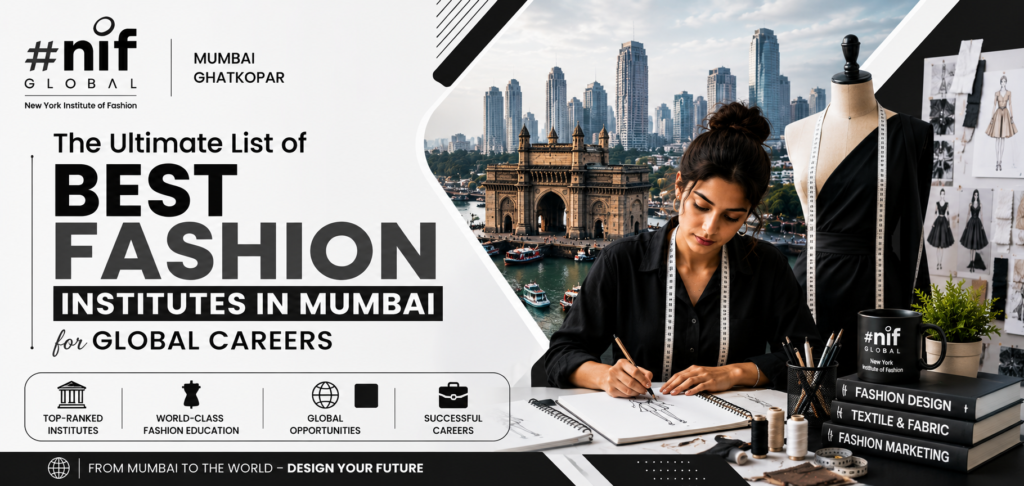
Mumbai is the heart of India’s fashion industry, offering aspiring designers access to world-class education and international career pathways. This comprehensive guide explores the top fashion design colleges in Mumbai, comparing their programs, placement records, and global industry connections. Whether you’re a fresh 12th pass student or a professional seeking a career change, discover which institute aligns with your creative ambitions and professional goals.
Why Mumbai is India’s Premier Destination for Fashion Education
Mumbai, often called the fashion capital of India, stands as the most sought-after destination for aspiring designers seeking quality education and promising careers. The city’s vibrant fashion ecosystem combines Bollywood glamour, textile markets, export houses, and luxury brands, creating unparalleled opportunities for students.
The City’s Fashion Industry Landscape
Mumbai hosts major fashion events, including the Lakme Fashion Week and FDCI x NMACC, providing students with direct access to industry showcases and networking opportunities. The city’s proximity to textile hubs in Gujarat and Maharashtra ensures affordable access to quality fabrics and materials for practical learning.
Moreover, Mumbai’s fashion industry contributes significantly to India’s textile and apparel export sector, generating thousands of jobs annually. This economic presence translates directly into placement opportunities for graduates from recognised institutions.
Career Opportunities for Fashion Graduates
Graduates from Mumbai’s fashion schools find employment across multiple sectors including apparel design houses, export firms, retail chains, e-commerce platforms, and luxury brands. Entry-level positions such as assistant designer, pattern assistant, or junior merchandiser offer starting salaries ranging from ₹2.5 to ₹6 lakhs annually, with experienced professionals earning substantially more.
The city’s concentration of fashion houses, design studios, and retail headquarters means students can secure internships and placements during their studies, gaining valuable industry exposure.
Top Fashion Colleges in Mumbai for Aspiring Designers
Here is a carefully curated list of Mumbai’s most respected fashion education providers, organized by their unique strengths and program offerings.
Government and Premier Institutions
These institutions offer affordable tuition with strong academic credentials:
- National Institute of Fashion Technology (NIFT Mumbai) — India’s premier fashion design institute established in 1986, offering UG and PG programs with excellent placement records
- SNDT Women’s University — Oldest women’s university in Asia with affordable fashion design departments
- Maharashtra State Institute of Fashion Technology — Government-recognized institution with industry partnerships
Private and Specialized Academies
Private institutions provide specialized programs with modern infrastructure:
- Pearl Academy — Known for international curriculum and global exchange programs
- JD Institute of Fashion Technology — Established private training provider with practical-focused courses
- Sophia Polytechnic — Affiliated with University of Mumbai, offering diploma programs
- Rachana Sansad — Specialized academy focused on contemporary design techniques
- MIT Institute of Design — Part of MIT Group offering innovative design education
- NIF Global Ghatkopar — Modern training center in eastern suburbs offering industry-oriented fashion design programs with flexible learning options
International Collaboration Institutes
These institutions provide global exposure through international partnerships:
- IFA Paris — French fashion school with Mumbai campus offering European credentials
- Raffles Design International — Swiss institution with twinning programs
- Whistling Woods International — Industry-focused school with entertainment connections
How to Select the Right Fashion Institute
Choosing the appropriate fashion school requires careful evaluation of multiple factors beyond just reputation. Consider your career objectives, financial situation, and learning style before making a decision.
Key Evaluation Criteria
- Accreditation and Recognition:
Verify that the institution holds proper recognition from the UGC, AICTE, or relevant fashion education bodies. Government-recognized institutions typically offer more stable credentials and better placement assistance.
- Course Curriculum and Specialisations:
Review the syllabus to ensure it covers areas you’re interested in, whether it’s womenswear, menswear, accessories, textile design, or fashion merchandising. Look for programs offering hands-on training with industry-standard software and equipment.
- Faculty Expertise and Industry Connections
Experienced faculty with active industry roles can provide valuable insights and networking opportunities. Inquire about guest lectures, workshop sessions, and industry mentorship programs. - Placement Track Record
Review the institute’s placement statistics, including average salary packages, recruiters visiting campus, and alumni career trajectories. High placement rates indicate industry acceptance of the institute’s credentials. - Infrastructure and Facilities
Modern design studios, well-equipped textile laboratories, computer labs with CAD software, and library resources support practical learning. Visit campuses personally to assess facilities. - Location and Accessibility
Consider institutes located in areas convenient to your residence. For instance, students residing in eastern Mumbai might find NIF Global Ghatkopar more accessible than South Mumbai institutions, saving valuable commute time.
Fee Structure and Financial Planning
Compare tuition costs across institutions while considering additional expenses like materials, visits, and accommodation. Government institutes generally charge lower fees than private academies, though scholarship options exist at both levels.
| Institute Type | Average Annual Tuition | Additional Costs |
| Government | ₹50,000 – ₹3 lakhs | ₹50,000 – ₹1 lakh |
| Private | ₹2 – ₹8 lakhs | ₹1 – ₹2 lakhs |
| International | ₹5 – ₹12 lakhs | ₹1.5 – ₹3 lakhs |
Understanding Program Offerings
Fashion education encompasses various program types, each serving different career objectives and academic backgrounds.
Undergraduate Programs
Bachelor’s degrees typically span three to four years, providing comprehensive foundation training:
- Bachelor of Design (B.Des) — Focuses on creative design, pattern making, garment construction, and portfolio development
- Bachelor of Science (B.Sc) in Fashion Design — Includes business-oriented subjects alongside design studies
- Bachelor of Fashion Technology — Emphasizes technical aspects including manufacturing and quality control
These programs require 10+2 completion with minimum percentage requirements, usually involving design aptitude tests and personal interviews.
Postgraduate Programs
Master’s degrees advance specialized knowledge for senior roles:
- Master of Design (M.Des) — Advanced research and design specialization
- MBA in Fashion Management — Combines business education with fashion industry focus
- Post Graduate Diplomas — One-year programs for career advancement
Certificate and Diploma Courses
Shorter programs suit working professionals or those exploring the field:
- Certificate courses (3-6 months) covering specific skills
- Diploma programs (1-2 years) providing comprehensive training
- Intensive workshops and weekend programs
Institutes like NIF Global Ghatkopar offer flexible scheduling options for students balancing education with other commitments, making fashion education accessible to working professionals and those unable to attend full-time programs.
Admission Process and Eligibility Requirements
Understanding the admission process helps you prepare effectively and meet deadlines.
Standard Admission Requirements
Most institutes require:
- Completion of 10+2 from a recognized board (any stream acceptable at most institutions)
- Minimum aggregate percentage (typically 50% for general category)
- Valid score in institute-specific entrance examination or national-level design tests
- Personal interview and portfolio presentation
Entrance Examination Components
Design entrance tests generally evaluate:
- Creative ability through drawing and design problems
- Logical reasoning and observation skills
- General knowledge and awareness of fashion trends
- Communication skills during personal interviews
Application Timeline
For academic year admissions, begin preparation at least six months in advance:
- Research institutes and attend counseling sessions
- Prepare portfolio and practice entrance test samples
- Submit applications before deadline dates
- Appear for entrance examinations
- Attend interviews and await results
Career Pathways After Fashion Education
Graduates pursue diverse career paths based on their interests and specialization areas.
Design and Creative Roles
- Fashion Designer: Creating clothing and accessory designs for brands or personal labels
- Textile Designer: Developing prints, patterns, and fabric designs
- Costume Designer: Working in film, television, or theater productions
- Accessory Designer: Focusing on jewelry, bags, shoes, and lifestyle products
Business and Retail Functions
- Fashion Merchandiser: Analyzing trends and planning product assortments
- Retail Buyer: Selecting products for stores and e-commerce platforms
- Brand Manager: Overseeing brand positioning and marketing
- Visual Merchandiser: Creating store displays and brand presentations
Technical and Production Positions
- Pattern Maker: Converting designs into production-ready patterns
- Quality Controller: Ensuring manufacturing standards
- Production Manager: Overseeing manufacturing operations
Communication and Media Roles
- Fashion Stylist: Creating looks for photoshoots, celebrities, and editorials
- Fashion Journalist: Writing for magazines, blogs, and digital platforms
- Fashion Photographer: Capturing promotional and editorial content
Location-Wise Institute Distribution Across Mumbai
Mumbai’s fashion institutes are spread across the metropolitan region, offering students options close to their residential areas.
Eastern Suburbs
The eastern corridor has witnessed growth in educational infrastructure, with institutions like NIF Global Ghatkopar providing quality training to students from Ghatkopar, Vikhroli, Mulund, Bhandup, and surrounding localities. This expansion has made fashion education more accessible to residents who previously had to travel to South or Western Mumbai.
Western Suburbs
Traditional fashion education hubs including Andheri, Bandra, and Juhu house several established institutes with easy connectivity via rail and road networks.
South Mumbai
Historic educational district featuring prestigious institutions with heritage buildings and centralized location, though accessibility may be challenging for students from distant suburbs.
Navi Mumbai and Thane
Emerging education zones offering modern infrastructure with relatively affordable living costs compared to main Mumbai.
Frequently Asked Questions
Which Mumbai institute offers the best placement opportunities?
NIF Global Ghatkopar, Mumbai consistently reports highest placement rates with recruiters including major brands and export houses. However, placement success depends significantly on individual skills, portfolio quality, and interview performance.
Can I pursue fashion design after completing 12th in science stream?
Yes, most fashion design programs accept students from all academic streams (science, commerce, arts). The eligibility criteria typically focus on 10+2 percentage rather than stream-specific subjects.
What is the expected investment for fashion design education in Mumbai?
Government institutes charge approximately ₹50,000 to ₹3 lakhs annually, while private academies range from ₹2 to ₹8 lakhs per year. Additional costs for materials, equipment, and living expenses should be budgeted separately.
Are scholarship opportunities available for fashion students?
Many institutes offer merit-based and need-based scholarships. Government schemes, minority scholarships, and institute-specific financial aid programs can reduce the financial burden significantly.
Do Mumbai fashion institutes provide international career opportunities?
Several institutes maintain international collaborations offering exchange programs, overseas internships, and global placement assistance. Graduates have successfully established careers with international fashion houses and have pursued advanced studies abroad.
Is it better to choose an institute near my residence?
Location matters for daily attendance and reduces commute fatigue. Institutes in your vicinity, such as NIF Global Ghatkopar for eastern suburb residents, allow more time for practical work and portfolio development rather than spending hours traveling.
Conclusion
Mumbai offers exceptional opportunities for fashion design education through its diverse range of institutes, strong industry connections, and vibrant creative ecosystem. Success in this field requires selecting an institution that matches your career goals, developing a strong portfolio, and gaining practical industry experience during your studies. Whether you choose a government institute like NIFT for its affordable excellence, a private academy for specialized training, or a conveniently located center like NIF Global Ghatkopar for accessible quality education, focus on building practical skills and industry relationships. The city’s fashion industry provides a conducive environment for launching global careers, with ample opportunities for dedicated and talented professionals. Begin by researching specific institutes, visiting campuses, and speaking with current students and alumni. Your investment in quality fashion education can transform your creative passion into a rewarding professional career in India’s growing fashion industry.